
Making Fresh Flowers Last: Practical Care Tips
Few things beat receiving a stunning fresh flower bouquet. Whether it's a surprise for a birthday, an anniversary gift or simply a considerate "thinking of you" gesture, fresh blooms bring instant cheer to any room. But the real question is how long you want that happiness to last, right?
The good news is that with proper care, your flowers can stay vivid and lovely for up to two weeks. Many happy customers across Glasgow and Greater Glasgow have kept their blooms fresh with us, and we're sharing our favourite tips with you.
Why Fresh Flowers Wilt (And How to Stop It)
Before getting into care tips, it helps to know why flowers fade. Cut flowers are living things that need water, nutrients and the right surroundings. Once separated from their roots, they depend entirely on what you give them. Germs in the water, air bubbles in stems and the surroundings can all cut short how long they last.
No need to worry, though! A handful of simple steps can make a real difference.
The First 30 Minutes: Setting Up for Success
How you handle your same-day flower delivery arrives matters more than you'd expect. These first steps lay the groundwork for long-lasting blooms.
Unbox Immediately (But Carefully)
Once your delivery arrives, open the box or unwrap the bouquet straight away. Flowers need airflow, and leaving them wrapped for too long can make them wilt early. Take off the packaging, but keep the stems bunched together for now.
Prepare Your Vase Properly
Pick a clean vase that suits the size of your bouquet. A frequent error? Using one that's too small, which squeezes the stems and limits water flow. If you've ordered one of our striking vase arrangements, you already have the right container sorted.
Fill your vase with room-temperature water (neither icy nor hot). Add the flower food sachet if your bouquet came with one. These sachets aren't a gimmick: they hold sugar for energy, acids to keep the pH balanced and antibacterial agents that really do help.
💡 Pro Tip
No flower food to hand? Make your own! Stir one teaspoon of sugar, two teaspoons of lemon juice and one teaspoon of bleach into a litre of water. This homemade mix copies shop-bought flower food remarkably well.
The Art of Cutting Stems
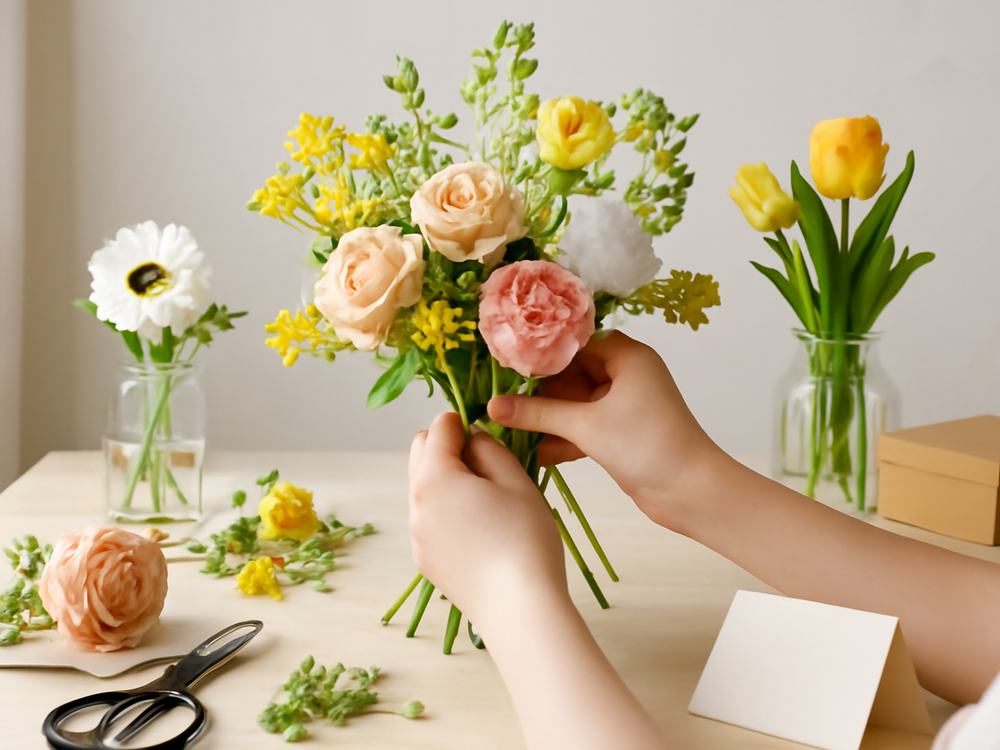
This step really matters. Before putting flowers in water, snip at least 2.5 cm off each stem at a 45-degree angle. The angle helps: it gives more surface for drinking and stops stems lying flat on the bottom of the vase, where they'd block water intake.
Use sharp scissors or secateurs. Blunt blades squash stems and damage the cells that carry water. Cut under running water if you can, or move the stems into water straight after cutting. This stops air bubbles forming in the stems, which would block hydration.
Daily Maintenance: Small Efforts, Big Results
Change the Water Every Two Days
Fresh, clean water is every flower's best ally. Every 48 hours, empty the old water, rinse the vase well and refill with fresh room-temperature water. This simple habit clears away the bacteria that make flowers wilt early.
When you swap the water, give the stems a fresh trim; about 6 mm is plenty. This reopens water channels that may have become blocked by bacteria.
Remove Wilted Blooms and Foliage
The moment a bloom begins to fade, lift it out of the arrangement. Dying flowers give off ethylene, which hastens ageing in neighbouring blooms. In the same way, remove any leaves below the waterline, since submerged foliage quickly becomes a home for bacteria.
Mist, Don't Drench
Most flowers enjoy a light misting, particularly during dry Glasgow winters when indoor heating drains the humidity. However, don't drench the blooms: too much moisture on petals can lead to rot or mould, especially on delicate types like roses and tulips.
Location, Location, Location: Where to Display Your Bouquet
Keep Them Cool
Flowers last longest in cool surroundings. Ideally, keep your bouquet in a room between 65-72°F (18-22°C). Keep arrangements away from heating vents, radiators and sunny windowsills. Direct sunlight may look lovely in photos, but it greatly shortens how long flowers last.
Florists have a handy trick: if you're heading out for the day, you can pop your arrangement in the fridge (yes, really!). Chilly temperatures slow down ageing. Just keep it away from ripening fruit, which gives off the ethylene gas mentioned earlier.
Avoid Draughty Spots
Although flowers enjoy coolness, they don't like draughts from air conditioning, open windows or fans. These dry them out quickly, leaving petals parched and brittle.
Flower-Specific Care Tips
Each flower has its own needs. Here's how to look after some of the most popular varieties we send around Glasgow:
Roses
Roses have a big thirst! They drink more than most flowers, so check the water level every day. Gently remove the guard petals (the outer ones that look a little bruised), which protect the bloom in transit but should come off once it's home. If the heads start to droop, submerge the whole stem in lukewarm water for an hour to perk them up.
Tulips
Tulips keep growing after they're cut, sometimes adding several centimetres to their height. They prefer shallow water, so fill the vase only 8-10 cm deep. Trim the stems every couple of days to keep water flowing. Fun fact: tulips are phototropic, so they turn towards light and create ever-changing shapes in an arrangement.
Lilies
Take out the stamens (the pollen-carrying parts) as soon as the blooms open. Lily pollen marks anything it lands on and can be harmful to cats. Lilies are thirsty, so keep a close eye on the water. They're also sensitive to ethylene, so keep them away from ripening fruit and vegetables.
Hydrangeas
These lovely blooms are known for wilting fast, as they take up water through both stems and petals. If they begin to droop, fully immerse the flower head in cool water for 30 minutes, which usually brings them back nicely. Keep the vase topped up, as hydrangeas really do live up to their name!
Orchids
If orchids have arrived in your vase arrangement, treat them differently from other cut flowers. They like indirect light and very little water, so mist the roots lightly every few days instead of soaking the stems.
Advanced Techniques for Maximum Longevity
The Boiling Water Trick
It may sound odd, but it works wonderfully on woody-stemmed flowers such as roses and hydrangeas. Dip the bottom 2-3 cm of each stem into boiling water for 30 seconds, then move them straight into cool water. This clears air bubbles and kills bacteria at the cut, helping water travel up the stem.
The Vodka Method
Stir a few drops of vodka (or another clear spirit) into the vase water. Alcohol slows bacterial growth, so the water stays fresher for longer. Go easy, though, since too much can harm the flowers instead.
The Penny Trick
Drop an older copper penny into the vase, as pennies used to contain more copper. Copper acts as an acidifier and antifungal agent. This old-school approach has real scientific support!
What to Do When Flowers Start Fading
Even with the best care, blooms eventually fade, as is natural. Still, you can make the most of their beauty and even reuse them in creative ways.
Create Smaller Arrangements
When a few blooms start to fade, take them out and make smaller displays from the rest. This lets you enjoy different arrangements around your home, while each flower gets more room and water.
Dry Your Favourites
Before the flowers fully wilt, hang them upside down somewhere dark and dry for 2-3 weeks. Roses, lavender and baby's breath dry well, making lasting keepsakes from special Valentine's Day flowers or Mother's Day bouquets.
Press Individual Blooms
Place blooms between heavy books to flatten and preserve them, ready for framing or craft projects. Pansies, daisies and other flat-faced flowers are especially good for this.
Common Mistakes That Shorten Flower Life
Watch out for these common slip-ups that even keen flower fans make:
- Using tap water with a lot of chlorine: If your Glasgow tap water has plenty of chlorine, let it stand for a few hours before use, or use filtered water.
- Packing the vase too tightly: Let every stem have room and easy access to water.
- Putting flowers beside electronics: Televisions, computers and other devices give off heat that speeds up wilting.
- Overlooking fruit: A fruit bowl beside the vase looks lovely, but ethylene from ripening fruit is one of the biggest threats to flowers.
- Reusing grimy vases: Germs from earlier displays hang around in vases that haven't been washed. Begin every arrangement with a clean container.
Seasonal Considerations for Glasgow Flower Lovers
Winter Care
Indoor heating through Glasgow's cold winters can leave the air very dry. A humidifier near your displays can help. When you receive same-day delivery in winter, let them settle to room temperature for 30 minutes before unwrapping. Going suddenly from chilly outdoor air to warm indoor air can harm delicate petals.
Summer Care
Warm summer days call for more frequent water changes and keeping displays in the coolest room you have. Think about moving the vase to a cool cellar or an air-conditioned room during the hottest part of the day.
The Bottom Line: Fresh Flowers Are Worth the Effort
Looking after fresh flowers can feel like a lot of effort, but these habits soon become routine. And the reward? Rather than enjoying your lovely bouquet for only a few days, you can admire it for a week, two weeks or even longer.
Each time you pass your striking display, whether it's a romantic rose bouquet, cheerful spring tulips or elegant Harvest flowers—you'll feel the same delight you did when it first reached your door.
At Meli Bloom, we've made our name by delivering farm-fresh, premium blooms to many happy customers across Glasgow and Greater Glasgow. We hand-select each flower so it arrives in top condition, giving you the best start for lasting beauty. Paired with these care tips, your flowers can brighten your home for far longer than you might think.
Ready to Enjoy Long-Lasting Fresh Flowers?
Explore our selected premium bouquets and arrangements, with same-day delivery in selected Glasgow and Greater Glasgow postcodes. Each one comes with our Happiness Promise.
Frequently Asked Questions
How long do fresh flowers stay fresh?
With good care, most cut flowers last 7-12 days. Sturdier types such as carnations and alstroemeria can reach three weeks, while delicate blooms like tulips usually manage 5-7 days.
Is warm or cold water better for flowers?
Room-temperature water suits most flowers. Bulb flowers such as tulips and daffodils are the exception, as they prefer it cooler. Steer clear of icy water, which can shock the stems and slow how well they drink.
Why are my flowers fading so fast?
The usual causes are germs in the water, spots near heat or direct sun, being close to ripening fruit, dehydration, or flowers that weren't very fresh when they arrived. Following our care tips should help them last considerably longer.
Is there a way to revive drooping flowers?
Often, yes! Trim the stems again at an angle, switch to fresh water and move the display somewhere cool. For really severe drooping, submerge the whole stem (and even the heads of some varieties) in lukewarm water for an hour.
Is flower food really essential?
It isn't strictly essential, but flower food really does help blooms last by supplying nutrients and keeping bacteria in check. Without a commercial sachet, the homemade mix above does nearly as good a job.